
Offices: Find Your Flexible Workspace
When Work Moves Faster Than Office Leases The word “offices” used to mean something fixed. Cubicles in rows, assigned desks, fluorescent lighting. These spaces worked when everyone stayed in one place, at set hours, with permanent assignments.
offices
When Work Moves Faster Than Office Leases
The Traditional Office Setup
The word “offices” used to mean something fixed. Cubicles in rows, assigned desks, fluorescent lighting. These spaces worked when everyone stayed in one place, at set hours, with permanent assignments.
Traditional corporate environments ran on predictability. You knew your desk number, your floor, your parking spot. That system made sense when careers followed linear paths and companies grew slowly within single markets.
Why Flexible Workspaces Exist
Flexible workspaces emerged because the old model couldn’t bend. People move between cities, projects, and companies more than systems expect. The question shifted from “Where is your desk?” to “Where do you need to work today?”
This wasn’t just about convenience. Careers unfold differently now. Teams collaborate across time zones. Businesses scale into new markets quickly. Remote work accelerated these patterns, but the need for workspace flexibility existed long before video calls became normal.
What “Office” Means Now
Key Insight: Modern workspaces aren’t defined by lease terms or fixed locations. They’re defined by functionality. The ability to maintain productivity across changing schedules and geographies.
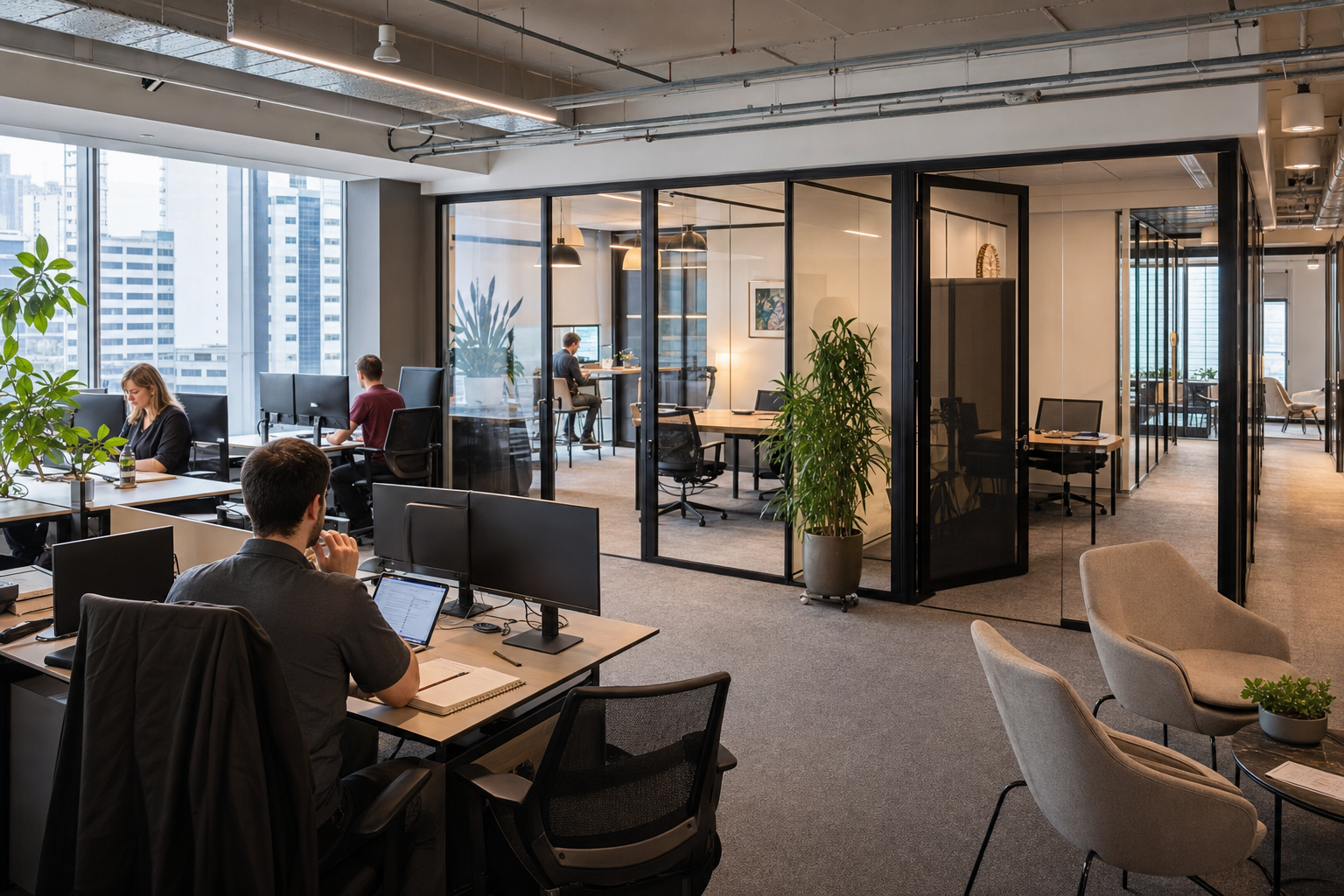
Today’s workspace includes shared desks, private suites, meeting rooms, phone booths. The plural “offices” refers to any professional environment that supports focused work and business operations. Location matters less than access and consistency.
The Problem With “Offices for Rent Near Me”
Traditional Commercial Leasing Friction
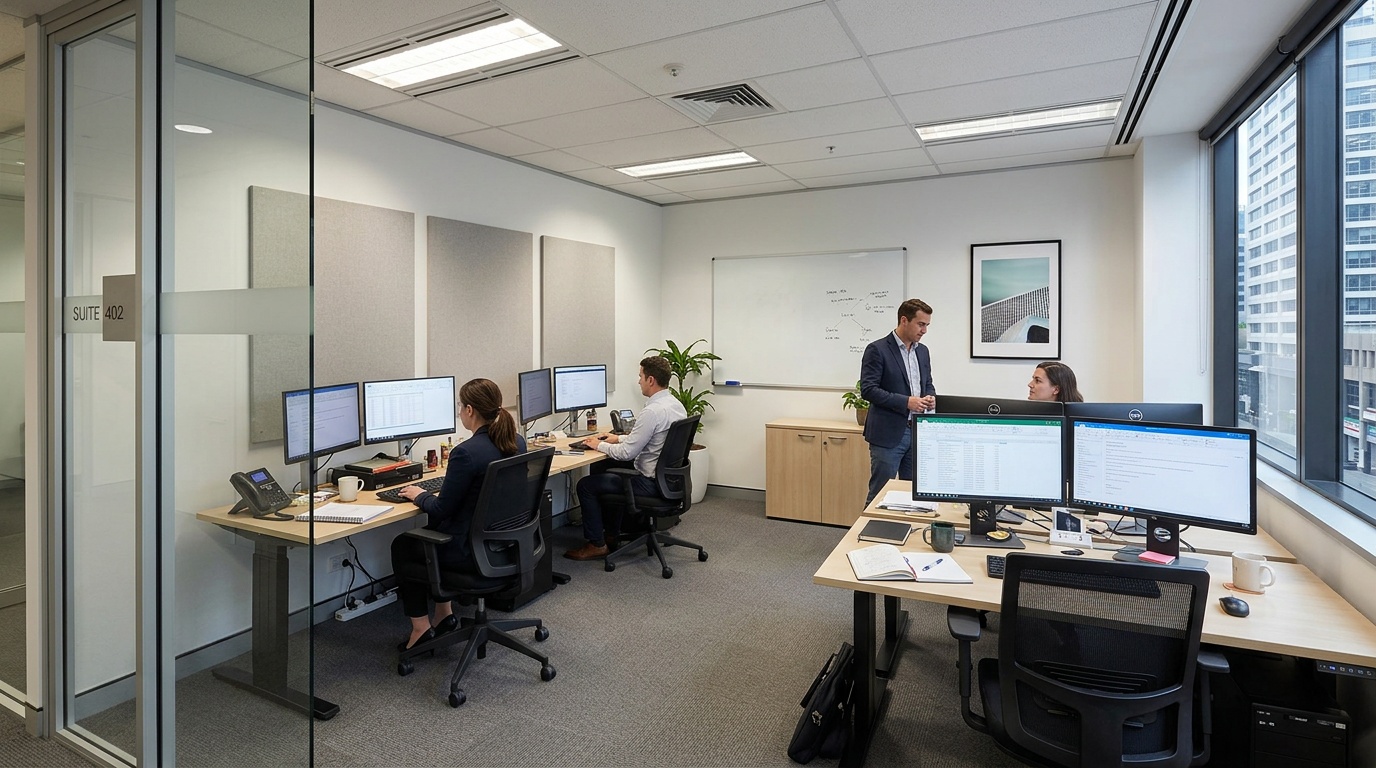
Search “offices for rent near me” and you’ll find the same cycle. Long-term leases lock you in for years. Security deposits drain cash flow. Hidden costs appear after you’ve committed. Commercial real estate still assumes businesses operate like they did in 1990.
The process wastes weeks. Site visits, negotiations, credit checks, paperwork. Your team needs space tomorrow, not next quarter.
The Real Comparison
| Factor | Traditional Lease | On-Demand Workspace |
|---|---|---|
| Commitment Period | 12-60 months minimum | Hourly to monthly options |
| Upfront Costs | Deposits, first and last month, setup fees | Pay-as-you-use pricing |
| Availability | Weeks to secure space | Instant booking confirmation |
| Location Flexibility | Fixed to one address | Access across multiple locations |
What Actually Matters
Location proximity matters, but connectivity often matters more. High-speed internet, reliable power, professional setting. If you’re comparing options, spaces like Signature Offices 333 Wabash deliver the basics without traditional leasing complexity.
Why Workspace Infrastructure Breaks Down
The “Now Hiring” Problem
Walk into many government buildings and you’ll see “Now Hiring” signs taped everywhere. Skeleton crews handling double workloads. Systems breaking under pressure.
That’s not just a public-sector issue. It mirrors what happens when businesses outgrow their workspace setup too quickly. Limited meeting rooms create scheduling conflicts. Cramped conditions slow productivity. Inflexible lease terms block scaling when opportunities appear.
How Space Affects Operations
Efficient workspace removes friction from daily work. Teams spend less time coordinating space and more time executing projects. Client meetings happen without scrambling for rooms. New hires get productive space immediately.
Modern workspace access operates like well-staffed infrastructure: responsive, scalable, ready for demand spikes. When your business needs expand quickly, workspace access should expand just as quickly.
The Hidden Cost of Poor Workspace
Key Insight: The real cost of inefficient workspace isn’t rent or utilities. It’s productivity lost to coordination overhead, deals delayed by inadequate facilities, and talent that goes elsewhere because your infrastructure can’t support growth.
Every minute spent managing workspace logistics is a minute not spent on core business. Inefficient setups create delays that compound. Smart infrastructure investment pays back through reduced friction.
How Hotdesk Works Differently
No Membership Friction
Most platforms require sign-up before you can see availability. Hotdesk works differently. Browse spaces, check availability, book immediately. No membership fees. No recurring subscriptions. Pay for what you use, when you use it.
This removes commitment friction that stops teams from accessing workspace when needed. No contracts to review. No approval chains. Direct access to professional workspace across multiple locations.
Consistent Standards Across Cities
Hotdesk maintains consistent standards whether you’re booking in Chicago, Dubai, or Barcelona. The booking flow stays familiar. Expectations are clear. Basics are reliable. Your workflow doesn’t reset each time you change cities.
That consistency matters when deadlines don’t pause for travel. Projects continue. Client calls happen on schedule. Productivity stays steady as geography changes. Professionals can access professional workspace in London’s Baker Street with the same experience they’d find in other major cities.
Built for How Teams Actually Work
Freelancers book professional settings for client meetings without long commitments. Startups scale access as teams grow, paying only for current needs. Enterprise teams book space in new markets without negotiating separate leases.
Spaces like Signature Offices 333 Wabash provide professional infrastructure serious work requires, available on demand rather than through traditional commercial leasing.
For Workspace Operators
Workspace operators reach demand that traditional marketing channels miss. Hotdesk connects underused space with professionals who need flexible access, creating revenue that complements existing tenant relationships.
Why Continuity Matters More Than Access
Belonging Through Repeated Presence
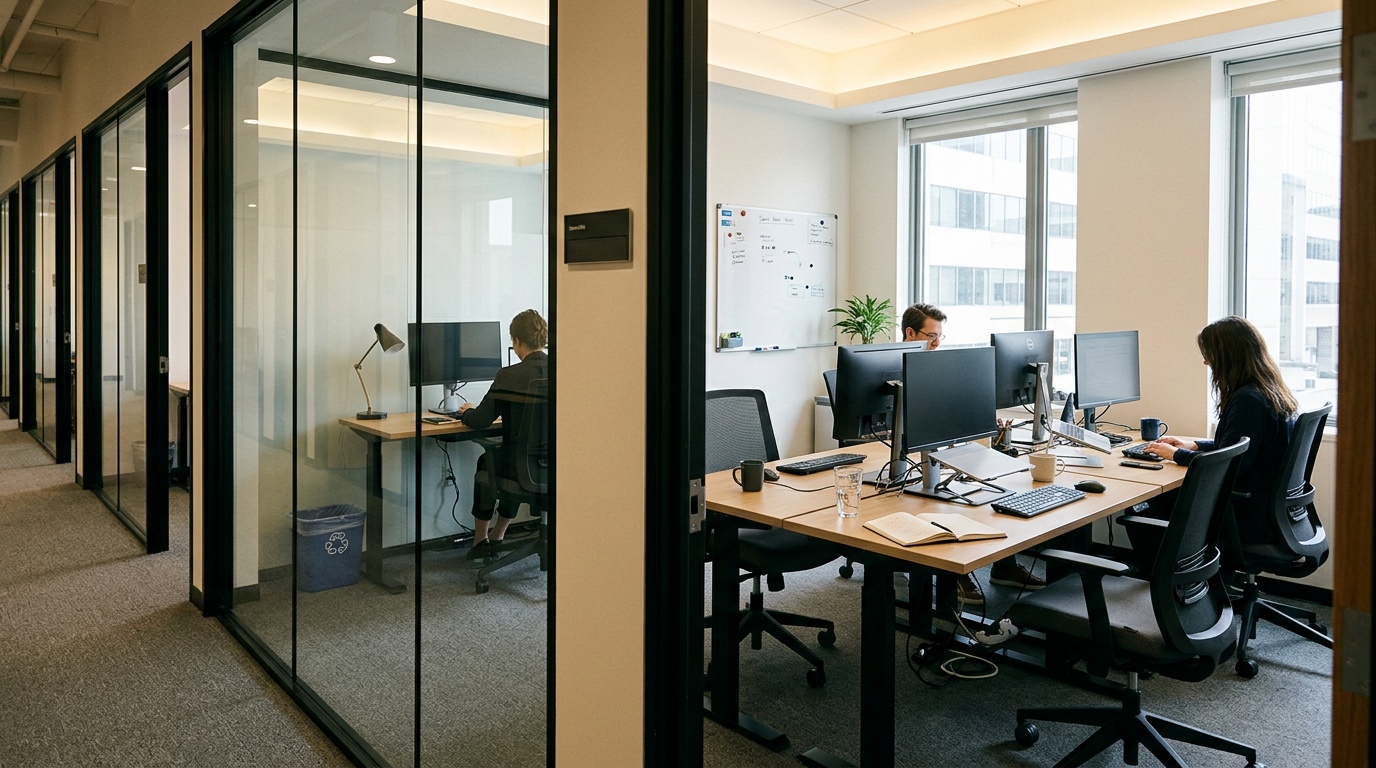
Belonging develops through repeated presence, not marketing promises. When you use the same workspace network across cities, familiarity builds naturally. You recognize the booking interface. You understand typical layouts. You know what to expect.
That familiarity reduces orientation time. You focus on work instead of figuring out how each new location operates.
What Continuity Actually Means
Continuity means your workspace experience travels: predictable confirmations, consistent expectations, reliable connectivity. Moving between locations doesn’t require relearning systems each time.
This supports how work happens now. Projects span multiple cities. Teams collaborate across time zones. Professionals move between markets. Infrastructure should adapt to these patterns, not resist them.
The Foundation for Mobile Work
Consistent work requires consistent infrastructure. Professional environments for focused tasks. Connectivity that supports video calls. Booking systems that behave the same way across locations.
Key Insight: The future workspace isn’t about choosing between traditional and flexible options. It’s about building systems that support how work happens across locations and projects, without constant reorientation.
Hotdesk reflects this approach: infrastructure that adapts to movement instead of resisting it. As businesses operate across wider geographies and teams collaborate from distributed locations, professional mobility increases.
Making Workspace Decisions That Scale
The Real Cost Calculation
Smart workspace decisions go beyond sticker prices. Consider time spent coordinating space. Productivity lost to inadequate facilities. Opportunities missed due to inflexible arrangements. Hidden costs often exceed visible line items in lease agreements.
On-demand workspace reduces coordination overhead while offering fast access to professional environments. The financial model matches usage instead of forecasts, reducing waste and protecting cash flow.
Building Resilient Operations
Resilient operations need backup options that don’t require emergency procurement. When your primary location becomes unavailable, established access to alternate professional environments keeps projects moving.
This matters during rapid growth, market expansion, or unexpected disruption. Teams stay productive because workspace access scales quickly. Whether you need premium office space in Dubai’s downtown district or flexible arrangements in other business centers, established access prevents operational interruptions.
What’s Coming Next
Workspace technology moves toward simpler transitions between physical space and daily tools. Automated booking. Smoother check-in. Better integrations reduce friction between locations.
The best solutions feel almost invisible while delivering consistent quality. Technology should simplify access, not add steps.
Your Next Steps
Start With Real Problems
Identify current workspace pain points. Are you paying for unused space? Struggling to accommodate growth? Need professional environments in new markets? Specific challenges shape strategy better than abstract planning.
Test flexible workspaces with short-term bookings before larger commitments. Real usage data guides decisions better than projections.
Integration That Works
Effective integration requires clear processes for booking, expense tracking, and team coordination. Set guidelines for when team members should use flexible workspace versus other arrangements. Clear guidelines reduce confusion and improve adoption.
Train teams on available options and booking steps. Infrastructure only helps when people know how to use it. Consider exploring options like Barcelona’s Crec Eixample Gran Via for teams expanding into European markets.
Measuring What Matters
Track metrics that matter: time saved on coordination, meeting availability, overhead costs, team satisfaction. These measurements show real impact on operations.
Regular evaluation helps optimize usage patterns and identify improvements. The goal is workspace access that supports business objectives without constant administrative effort.
Frequently Asked Questions
What are modern offices?
The word “offices” once referred to fixed spaces with cubicles and assigned desks. Today, “offices” means any professional environment that supports focused work, collaboration, and business operations. This includes shared desks, private suites, meeting rooms, and phone booths, defined by functionality and access rather than a single location.
What is the modern meaning of "offices" in the plural?
While “office” can refer to a single physical location, the plural “offices” now describes the entire system of professional environments. This includes various spaces like coworking areas, private suites, and meeting rooms, all supporting focused work and collaboration. It reflects how work happens across many locations, not just one.
What are modern offices used for today?
Modern offices are used to support focused work, foster collaboration among teams, and facilitate essential business operations. They provide the necessary infrastructure for client meetings, project execution, and immediate productivity for new hires. The goal is to remove friction and enable efficiency wherever work needs to happen.
Can you give examples of modern offices?
Modern offices go beyond traditional setups and include coworking spaces, hot desking arrangements, and private suites. Meeting rooms and phone booths are also examples of specialized office environments. These flexible options, like those found through on-demand booking systems, provide diverse settings for professional work.
How has the concept of an office changed over time?
The concept of an office has evolved from fixed cubicles and assigned desks to a flexible system. It moved from a single, predictable location to a dynamic environment where work happens across various spaces. This shift reflects how careers unfold and how businesses scale in today’s mobile world.
What are the advantages of on-demand workspaces compared to traditional leases?
On-demand workspaces offer significant advantages like hourly to monthly commitment options, eliminating long-term leases and large upfront costs. They provide instant booking confirmation and access across multiple locations, unlike traditional leases that lock you into one fixed address for years. This flexibility supports continuity and scalability for businesses.